


-------------- 라이프스타일 --------------
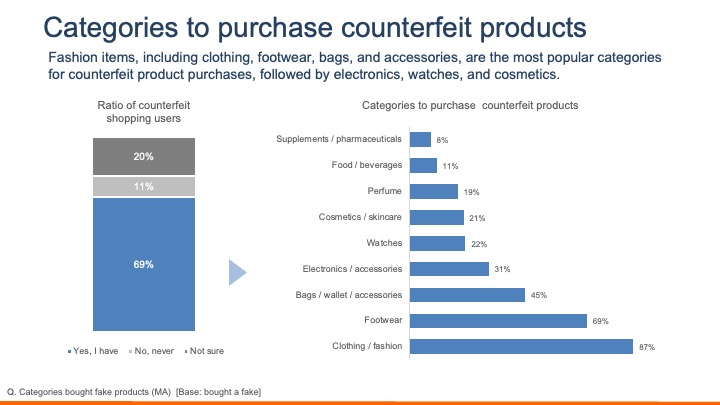
69% of urban Vietnamese consumers have bought a counterfeit product, and the behavior is most common among those in their 20s, at 84%.
Fashion leads counterfeit buying — clothing (87%), footwear (69%) and bags (45%) — while electronics, watches and cosmetics follow at lower but still notable rates.
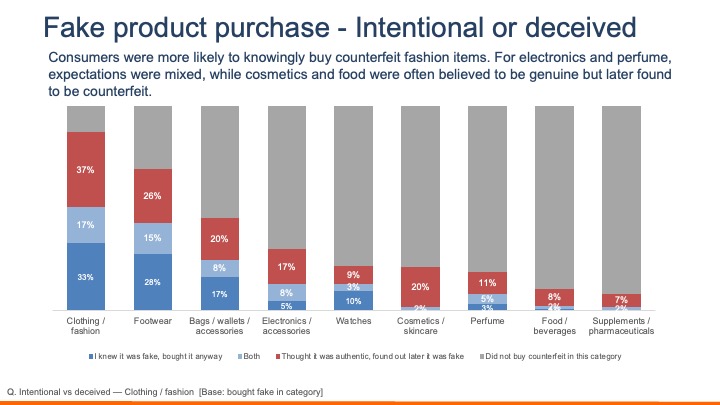
Shoppers knowingly buy fake fashion items, but cosmetics and food are more often mistaken for genuine and discovered to be counterfeit only later.
Over half accept fakes in fashion and footwear, yet acceptance is mostly conditional — consumers prefer authentic goods but tolerate fakes when prices are attractive.
Health-related categories stay firmly protected: counterfeit cosmetics, food and supplements are rejected by the vast majority, regardless of how low the price.
To distinguish genuine from fake, consumers rely most on QR codes and official stores (both 69%), and treat unusually low prices as a warning sign.
200 Vietnamese male and female in HCM and Hanoi, 20-49 years old