


-------------- 美容 --------------
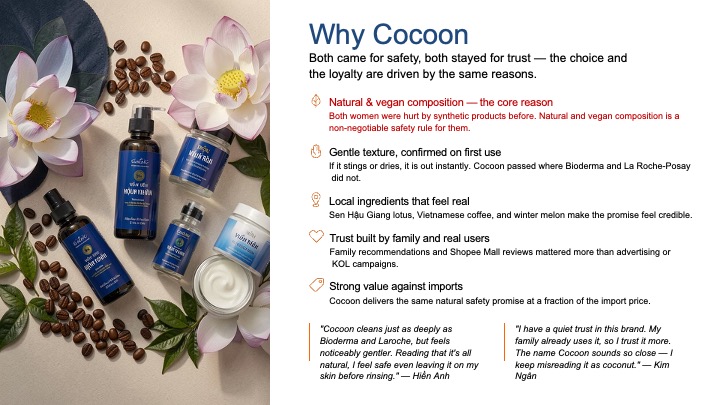
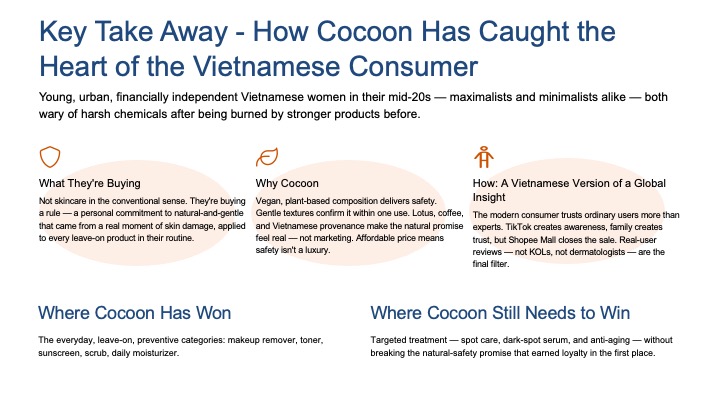
Natural-and-vegan is the new safety rule - both users were burned by synthetic products and now refuse anything that isn't plant-based for daily leave-on care.
Local ingredients make the promise feel real - Sen Hậu Giang lotus, Vietnamese coffee, and winter melon turn natural positioning from marketing into credible proof.
Trust flows horizontally, not from authority - real Shopee Mall user reviews and family recommendations close the sale; KOLs only spark discovery and dermatologists are skipped entirely.
Affordable safety beats premium safety - Cocoon delivers the same natural promise at roughly half the price of Klairs, Bioderma, or La Roche-Posay.
Cocoon owns prevention, not yet treatment - winning in remover, toner, sunscreen, and scrub; still losing dark-spot, anti-aging, and BHA categories to French pharma brands.
Foreign prestige has lost its automatic premium - Klairs stung, La Roche-Posay dried skin out, and counterfeit risk on imports now actively pushes consumers toward local brands.
Based on 2 In-depth interviews